What's included in a cruise fare and what costs extra?
Understand typical cruise-fare inclusions and extras: meals, drinks, excursions, Wi-Fi, gratuities, taxes and insurance.
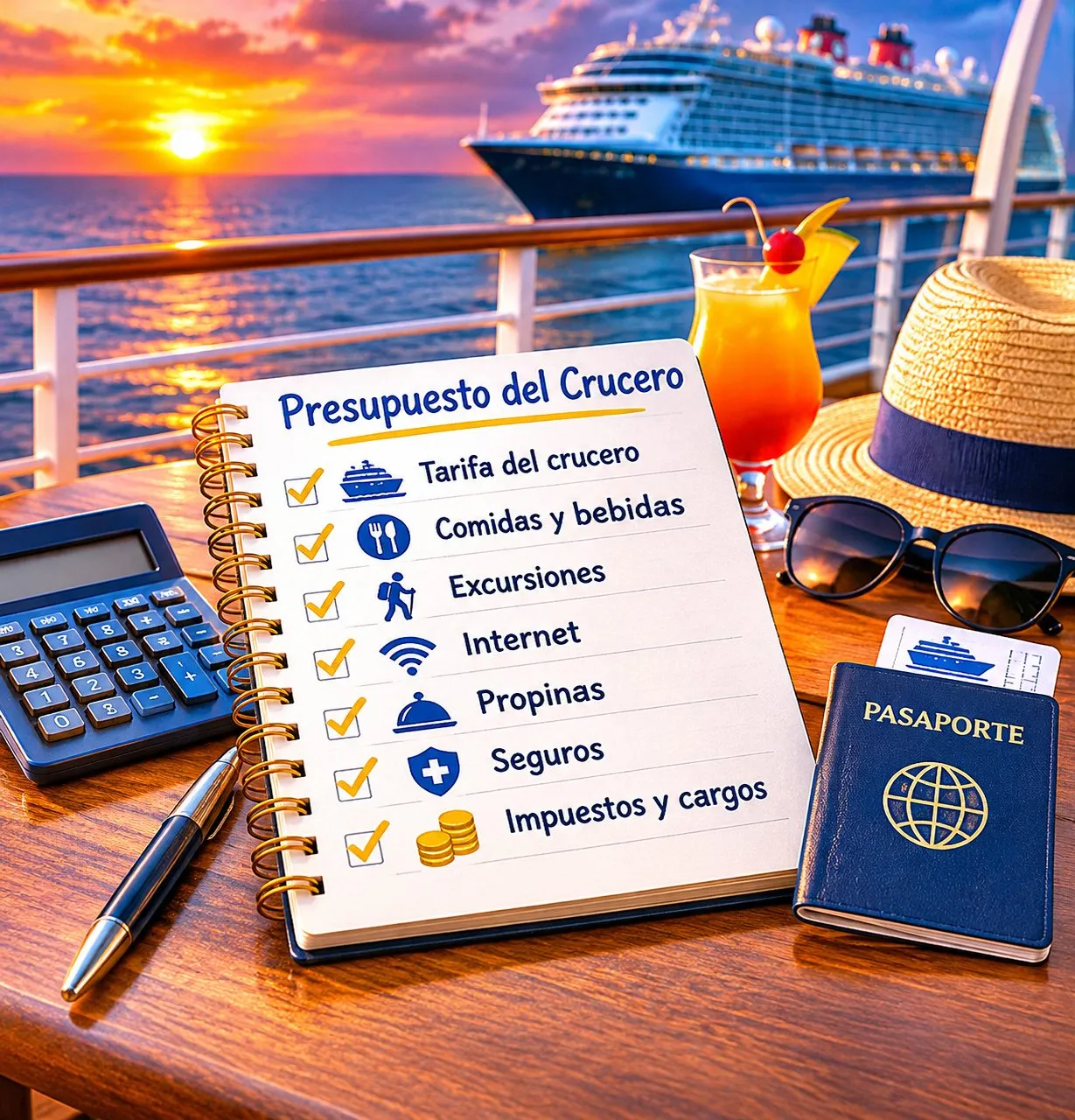
1. What a cruise fare actually covers
A cruise fare usually covers accommodation onboard and a package of basic services over the booked nights. However, not every fare includes the same benefits, even within one cruise line.
Before comparing offers, check the exact ship, date, cabin category and occupancy. Do not decide only from a per-person price. Some fare types add packages, benefits or conditions that change the comparison.
2. Cabin, housekeeping and common areas
Accommodation in your booked cabin and access to many common spaces are typically included. Cabin type—inside, oceanview, balcony or suite—changes the experience, and some premium areas may be restricted to certain categories.
Check whether pools, gyms, lounges or children's spaces have age limits, opening hours or special fees. Some facilities shown in marketing materials are reserved for specific guests.
3. Included dining, specialty restaurants and meal schedules: how to plan
Many cruises include the main dining room, buffet and selected casual venues in the fare. Specialty restaurants, such as steakhouses or seafood venues, usually cost extra unless your fare or stateroom category includes eligible meals. Check how many meals your plan covers, participating venues and whether drinks, gratuities and premium menu items cost extra.
If a particular dining venue matters to you, reserve before sailing whenever the cruise line allows it. Royal Caribbean, Carnival and Norwegian offer ways to prebook specialty dining. If you missed the booking window, check the app or restaurant reservations desk as soon as you board, especially for anniversaries and larger groups.
Do not choose dinner times without checking the show schedule. The ship's daily program or app may list theater performances, live music, themed evenings and other events. Multi-course dinners can take longer than casual meals, so allow enough time to finish and reach your next activity. For a seven-night cruise, plan a flexible dining calendar early and adjust it for shore excursions.
Popular dinner times, roughly 6:30 p.m. to 8:30 p.m., may fill up first. Royal Caribbean advises advance reservations for these popular hours. Some lines offer fixed traditional seating and flexible dining; booking the main dining room is not always the same process as booking a specialty restaurant.
For a wedding, anniversary or birthday, consider reserving the special dinner on the evening that suits your party. Check meal duration, cover charges, cancellation fees, group booking rules and age restrictions. Purchasing a dining package does not automatically guarantee your preferred reservation time.
Evening dress codes vary and can be called Formal Night, Cruise Elegant or Gala Night. A suit, tie or floor-length gown is not universally required. Carnival lists elegant outfit options with sport coats optional, while MSC recommends dressier attire and restricts certain clothes at its Gala Night restaurants. Check the policy for your particular ship and venue before packing.
If you prefer to stay casual after a busy day in port, look for the buffet, pizza spots, cafés or poolside dining. Depending on the ship, these can offer burgers, pizza, salads and other snacks into the evening. Royal Caribbean lists Café Promenade as open around the clock on many ships and Sorrento's Pizza as a late-night option on many others. Not every venue operates 24 hours, and some food or drinks may cost extra.
If you have food allergies, celiac disease or medical dietary restrictions, notify the cruise line when booking and ask about applicable forms and deadlines. MSC asks guests to report certain allergies when booking, no later than 30 days before sailing; Royal Caribbean has advance notice requirements for some special meals. Once onboard, reconfirm your needs with the maître d’hôtel and dining team before your first meal.
At breakfast and buffets, do not assume a dish is safe based on appearance or labels such as gluten-free, dairy-free or vegetarian. Ask about ingredients, sauces, shared utensils and allergen cross-contact. Carnival cautions that buffet and other venues cannot guarantee allergen-free food and recommends coordinating special meals with the main dining room.
If you follow a vegetarian or vegan diet, ask what is available for breakfast, lunch and dinner at the buffet, main dining room and specialty venues. Royal Caribbean offers daily vegetarian options and vegan menus on request in its main dining room; MSC also accommodates vegetarian and vegan preferences. Check ingredients such as stocks, gelatin, dairy and eggs when these matter to your diet.
If you have a history of serious reactions, consult your clinician before traveling, keep prescribed emergency medications with you and learn how to contact onboard medical services. Medication allergies should be communicated to medical personnel as appropriate, not only to restaurant staff. No ship can guarantee zero risk of allergen cross-contact.
One practical planning rule: review dinner bookings, entertainment schedules and dress-up evenings together before sailing. That small step can save you from choosing between a prepaid meal and the performance you most wanted to see.
4. Cruise drinks: what is included and when a package is worth it
Before purchasing a package, check what your fare already includes. Royal Caribbean and Carnival provide water, regular coffee, tea and certain dispenser beverages such as lemonade or iced tea in designated venues. Juice availability varies by venue and time. Soda, bottled water, specialty coffees and alcohol are not necessarily included.
There are no universal basic, intermediate and premium tiers. Cruise lines may offer soda plans, nonalcoholic options including specialty coffees and juices, and alcohol plans covering beer, wine by the glass and selected spirits. Check brands, per-drink limits, exclusions and service charges.
For families with children, estimate actual consumption first. Water, milk and included juices may be sufficient. Multiple sodas, smoothies and specialty drinks each day could justify a nonalcoholic package, depending on price and time spent aboard.
For couples who enjoy only an occasional drink, paying individually can be cheaper. Packages may make budgeting simpler for weddings, anniversaries or group celebrations, but they do not guarantee savings and generally cannot be shared. Royal Caribbean requires all guests of legal drinking age in the same stateroom to purchase the Deluxe Package when one does; Carnival has a similar rule for its CHEERS! program for guests aged 21 and over.
Picture enjoying a cappuccino or specialty tea in an ocean-view lounge at sunset while a piano plays. This is a possible cruise experience, not a guaranteed feature of every ship. Regular coffee and basic tea may be complimentary, while espresso, cappuccino and other specialties may cost extra or be included in certain beverage packages.
Compare the total package price across all required days and guests with what each person would reasonably spend on individual beverages, including applicable gratuities and taxes. Drinking more merely to justify the package does not make it a better deal.
Can you bring alcohol from home or purchase it in port? Beer and spirits generally cannot be brought aboard for onboard consumption. Royal Caribbean allows one sealed 750 ml bottle of wine or champagne per guest of legal drinking age on embarkation day. Carnival allows one per guest aged 21 or older in carry-on luggage. Norwegian permits wine subject to screening and corkage rules. MSC does not permit guests to bring alcohol aboard for consumption. Always verify the policy for your sailing.
Liquor purchased duty-free, onboard or in ports of call is commonly held by the ship until the end of the voyage. Do not expect to consume those bottles in your cabin. Concealing alcohol can result in confiscation or other consequences under the passenger contract. Also verify age limits, minibars, room service, private destinations and itinerary restrictions.
5. Entertainment, activities and children's programs
Many ships include shows and general activities, but reservations may be needed and certain experiences cost extra. Facilities and schedules depend on the individual ship, not only the cruise-line brand.
Children's programs often have age limits and set hours; some childcare, particularly outside standard times, may have extra charges. Verify details before selecting a family cruise around an advertised activity.
6. Cruise Wi-Fi, eSIMs in port, excursions and other expenses
Shipboard Wi-Fi, maritime cellular roaming and an international travel eSIM are different services. Onboard Wi-Fi may be sold by person, device or duration depending on the cruise; check price, limits and expected performance. Maritime cellular networks can carry roaming fees that differ from your regular international plan even if several countries are covered at no extra charge.
Holafly, a travel eSIM provider with which CrucerosEnUSA has an affiliate relationship, currently markets cruise eSIM plans for the Caribbean, Mediterranean, Europe and Alaska. An essential limitation applies: its cruise eSIMs use land-based mobile networks in ports and near the coast and do not guarantee coverage at sea. They may complement ship Wi-Fi but do not replace it throughout a voyage. Holafly also notes that its Caribbean plan does not provide service in Freeport, CocoCay or Ocean Cay in the Bahamas. Check coverage for every port on your itinerary before purchase.
If your current carrier already offers no-extra-cost roaming in the destinations on your itinerary, compare that first. Check each port, including the Bahamas or Jamaica where relevant, and separately ask whether your plan includes maritime cellular service. Do not assume free international roaming covers the ship's network. Once you know your itinerary, contact your mobile carrier before traveling and ask about coverage and the exact roaming costs in each country, port and while sailing. Specifically ask about the ship's maritime network rates for calls, texts and data to avoid unexpected charges if you don't purchase Wi-Fi or an eSIM.
An eSIM is installed digitally without swapping a physical SIM card; your phone must support eSIM and be carrier-unlocked. Holafly recommends installing the profile over reliable Wi-Fi before sailing and activating it at a supported port. These travel plans are generally data-only and may not include a separate telephone number or SMS authentication.
To reduce unexpected charges, keep airplane mode enabled while sailing and manually enable Wi-Fi if you have purchased ship internet. When ashore, activate the travel eSIM and mobile data according to the provider's instructions; verify which SIM line is used for data and which has roaming enabled.
For families, couples and remote workers, compare total ship Wi-Fi prices against device count and days at sea. If you only need maps, messages or booking information while ashore, included roaming or a port eSIM may be enough. Coverage, speed and hotspot sharing differ, so no provider should be presented as offering uninterrupted connectivity everywhere.
Before sailing, review each port of call and choose the experiences you most want: beaches, historic walks, boat tours, snorkeling or local food. Booking ahead may help secure limited places and avoid waiting in line during your vacation. Royal Caribbean and Carnival offer many excursions before sailing, with some remaining available onboard.
There are two routes worth comparing. Booking through the cruise line helps coordinate with the ship's itinerary; operators such as Royal Caribbean and Carnival offer specific assistance if their organized excursion runs late and risks missing the ship. Independent marketplaces such as Viator can offer different operators and experiences, making it easier to compare price, duration, group size, meeting point and cancellation rules.
Independent excursions do not automatically carry the cruise line's return-to-ship protection. On Viator, only experiences displaying the Worry-free shore excursion designation qualify for its specific protection, subject to terms. Viator also states that its cruise excursion search filters by port date but not necessarily by hours in port. Verify ship time, disembarkation, transfers, tour duration and a comfortable margin before final boarding.
If a port call changes or is canceled, review the relevant supplier's refund policy. Cruise-line excursions may have different conditions from independently booked tours. Viator says it does not automatically notify guests about cruise itinerary changes, so travelers should check and contact the operator when necessary.
Do not choose an excursion solely because it is cheaper. Before paying, compare total price with cancellation terms: how many hours in advance you can cancel, what percentage is refundable, whether money returns to your original payment method or becomes credit for a future trip, and how long processing takes. A slightly more expensive flexible tour can be better value when a port call is uncertain.
Viator experiences do not all use the same cancellation policy: some standard products offer a 100% refund when canceled at least 24 hours before the start, others have custom partial refunds, and some are final sale with no ordinary refund. A 24-hour free-cancellation window does not automatically guarantee a refund for a last-minute ship itinerary change. Review the specific product terms before paying.
Ask what happens in each scenario: the ship cannot dock in bad weather, arrives hours late, shortens its port stay, the tour operator cancels due to weather or safety, or you decide not to go. Rain alone does not automatically cancel a tour: some operate rain or shine while others stop when conditions are unsafe.
Some independent activities may refund missed port calls, while others may provide only future credit or require extra protection. Never assume a 100% automatic refund simply because a tour is booked via Viator. Save the cancellation policy, receipt, ship's port schedule and provider contact information for any change or refund request.
Cruise-line organized tours also have differing terms. Royal Caribbean says certain excursions can be canceled without penalty up to 48 hours before port arrival, with exceptions for special experiences. Carnival states that tours it cancels receive full refunds, although amounts may be credited to the onboard account during a sailing. Check the refund method and timeline applicable to your specific purchase.
If an accident, food poisoning, gastroenteritis or another sudden illness prevents you from joining an excursion, notify the operator promptly and seek medical attention when appropriate. Illness does not automatically entitle you to a refund: the tour terms may treat this as a late cancellation or no-show. Some suppliers may review exceptions with a medical certificate, but not all are required to grant them.
If an infectious-disease outbreak onboard, quarantine or public-health restriction prevents you from going ashore, keep any official notices. Refunds for independent excursions depend on their own terms and circumstances; any compensation for lost cruise days or services follows the ticket contract and applicable law. A tour refund is not the same as a refund of the full cruise fare.
Before booking, check whether travel insurance covers prepaid nonrefundable excursion costs due to covered interruption, illness or injury and includes medical care or evacuation. Outbreaks and pandemics, pre-existing conditions and certain risky activities may be excluded. Ask what evidence is required, such as medical records, receipts, cancellation confirmation and the operator's written response.
In an emergency, getting care and notifying the ship's staff come first; do not delay medical attention to manage a refund. Afterwards, document the incident, save receipts and pursue separate claims with the tour provider, cruise line or insurer as appropriate.
Some experiences at private destinations are marketed primarily through the cruise line. For example, Royal Caribbean handles bookings for the waterpark, cabanas and selected activities at Perfect Day at CocoCay, while Carnival offers experiences at Celebration Key. Do not expect every private-destination activity to be listed on Viator. Some destinations also include complimentary beaches and amenities.
Compare accessibility, age and fitness restrictions, provided equipment, insurance terms and safety requirements before selecting an excursion. Families might prefer a relaxed beach outing while couples or groups may enjoy cultural experiences or special celebrations. We do not recommend an activity solely because it generates affiliate income.
CrucerosEnUSA can help readers explore available Viator experiences matched to their ports of call. Use only authorized tracking links from our approved account and review product-specific conditions before buying. An excursion booking never replaces checking the ship's schedule and planning a safe return.
Spa treatments, professional photographs and certain restaurants often cost extra too. Promotions may provide credits, but always check their limits and conditions.
7. Gratuities, service charges and cash in ports of call
On many cruises, daily gratuities are prepaid or automatically added to the stateroom account. Check your booking: stateroom attendants and dining teams may already benefit from those charges. An additional cash thank-you for excellent cabin service is optional, not a second mandatory gratuity.
Check bar, specialty restaurant and spa receipts for separate service charges beyond the daily gratuity. Before disembarking, review the account and question unfamiliar charges. Amounts and policies vary by cruise line, fare and sailing date.
One practical tip drawn from travel experience shared with CrucerosEnUSA is to carry a modest amount of cash in small bills ashore. In Nassau, Jamaica and other ports it may help with a tour-guide tip, taxi, souvenir or local meal if a merchant cannot accept cards or has connectivity trouble. Always check accepted currency, exchange rates and whether service is already included.
When paying by card abroad, find out whether your bank charges a foreign transaction fee. Capital One confirms that its US-issued credit cards do not charge this fee. This does not remove interest, cash advance charges, potential annual fees or fees imposed by ATM operators. Review your specific card's conditions.
If a merchant offers to charge you in US dollars or local currency, compare conversion rates and avoid automatically accepting an unfavorable merchant conversion. A card without foreign transaction fees plus a small cash reserve provides flexibility without carrying excessive cash.
Some cards offer referral programs, but CrucerosEnUSA will use only referral or affiliate links expressly authorized for publication on this commercial website, with clear disclosure whenever compensation may be earned. Do not apply for a card solely for a bonus: compare interest rates, annual fees, eligibility and spending habits.
Request an itemized breakdown of port charges, taxes, insurance and other expenses before booking. Travel insurance is not automatically included in every fare; review its benefits, exclusions and terms separately.
8. Unexpected cruise expenses, laundry and budget control
Have you ever spent nearly the whole year looking forward to a vacation with your family? You chose the destination, arranged the trip and planned a budget to enjoy it. Once aboard, the last thing you want is to spend your days checking expenses—and you shouldn't have to. Just remember that little treats, from a specialty coffee and family photo to a souvenir or arcade game, can add up by the end of the cruise.
Many cruise lines let you review charges in an app, on the stateroom TV or through Guest Services. Royal Caribbean includes onboard spending in its app, and Carnival offers Sail & Sign account balances through its HUB app and other guest-service channels. For children, check whether spending privileges or certain entertainment charges can be limited; options vary by cruise line.
Potential extra charges include professional photos, photo packages, massages, spa services, laundry, pressing, beauty services, arcade games, shopping and some premium entertainment. Check the final price and terms before accepting an onboard promotion. Duty-free stores are not automatically cheaper than shops ashore.
For a seven-night sailing, consider packing enough versatile clothes for the whole trip rather than relying on frequent onboard laundry. Account for swimwear, at least one dressier outfit and anything that might get dirty on excursions. If washing or pressing is necessary, check the ship's laundry services: Royal Caribbean has no self-service laundries but does offer paid washing and pressing.
Important: having electrical outlets in your stateroom does not mean you can use a portable clothing iron or garment steamer. Royal Caribbean, Carnival and MSC prohibit clothes irons and garment steamers because of fire-safety concerns. A travel steamer that works well in hotels should not be recommended for use on those cruises. Always check your line's prohibited-items list.
To reduce wrinkles, unpack and hang clothing as soon as you arrive. Choose less wrinkle-prone fabrics, fold or roll carefully and ask whether your stateroom attendant can provide additional hangers. Packing organizers, compact non-heated hangers and similar accessories may help when permitted and when storage space allows.
If flying to Europe before or after your cruise, check outlet type, voltage and appliance compatibility separately for your hotel and ship. A plug adapter does not convert voltage and does not make prohibited items acceptable onboard. Avoid unauthorized power strips and extension cords.
A rewards credit card may give you cashback on eligible purchases, depending on the product and spending category. Before counting on that benefit, check foreign transaction fees and aim to pay your balance on time: interest can outweigh the rewards.
Some bank apps let you set purchase notifications for amounts above a threshold such as US$10. These can help you spot direct payments in port and unfamiliar activity, but notifications do not impose a spending limit or block charges automatically. If you lose your card or see suspicious activity, lock it through the app if available and contact your issuer promptly.
The goal isn't to monitor every purchase or worry about money while relaxing. Set aside a flexible amount for those little extras and glance at your onboard account occasionally, especially before you disembark. If a charge doesn't look right, ask Guest Services in time to resolve it. That way you can enjoy the vacation you've waited so long for without an unwelcome surprise on the final bill.
9. Cruise travel insurance: medical emergencies, interruptions and peace of mind
When planning a vacation, travel insurance can look like just another expense. Yet illness, an accident, a missed flight or a family emergency can make appropriate protection valuable. That does not mean every policy pays the same: benefits are always subject to covered reasons, limits and exclusions.
One real travel experience shared with CrucerosEnUSA occurred during a trip to Turkey. The first flight arrived late, causing a missed connection with the same airline. While waiting for rebooking, the traveler received access to a VIP lounge, light refreshments and a city tour. It illustrates why support during travel disruption matters, but we cannot attribute every benefit to insurance: some could have been provided by the airline. Check who provides each service, under what conditions and how to claim it.
On a cruise, visits to the ship's medical center, tests, medicines and treatments may incur separate charges. Hospital care at a port of call or an emergency medical evacuation can be extremely costly. The US Department of State cautions that evacuation by air ambulance to the US may cost tens or hundreds of thousands of dollars depending on the location and medical condition. Check that your policy explicitly includes shipboard care, foreign medical care, emergency transport and repatriation as appropriate.
Do not assume your regular health insurance will protect you outside the US. Ask your insurer what is covered, whether payment must be made upfront, which deductibles apply and what happens at sea or in port. Medicare generally does not cover medical care abroad, with limited exceptions for treatment on ships near US ports; certain Medigap policies may provide additional benefits. Check your own situation.
As a practical reminder, slips and falls, digestive problems or dental emergencies such as a lost filling can happen during a cruise. If traveling with children or older adults, check whether your policy covers emergency care and urgent dentistry. Original Medicare generally does not cover medical care outside the United States, apart from limited exceptions. Verify your coverage before sailing.
For children, consider pediatric emergency care, medicines and travel for a caregiver if needed. For older travelers, pay particular attention to age restrictions, pre-existing conditions, regular medications and the ship's medical capabilities. Anyone can have an unexpected emergency; the goal is to understand the itinerary and choose suitable protection without fear-based messaging.
Medical travel insurance is not the same as trip cancellation or interruption coverage. One policy may cover medical treatment without reimbursing a missed shore excursion; another may reimburse nonrefundable prepaid costs for a specifically covered reason such as documented illness. Flight delays, missed connections, baggage problems and public-health disruptions may all have different requirements or exclusions. Review limits, reporting deadlines, receipts and medical documentation.
If you already have benefits through a credit card or health policy, check exactly what they provide before buying another plan. Credit card benefits do not necessarily replace travel medical, evacuation or comprehensive trip coverage. A short-term policy for the cruise and connecting flights may help fill gaps, but check effective dates, destinations, activities and pre-existing conditions.
Before paying, compare medical expense limits, evacuation and repatriation, onboard care, interruption and delays, deductibles, direct payment arrangements, 24-hour assistance and exclusions. Requesting a quote helps you compare options; it neither purchases insurance nor confirms coverage.
10. Checklist for comparing the full cost
Compare the same dates, guest count, cabin category and services. Add port transport, flights where relevant, drinks, internet, excursions and other essential expenses.
Do not rely on demonstration prices. Request a verified quote from CrucerosEnUSA with actual availability and clear inclusions and extra-cost items.
Related resources
- How much is a cruise from Miami in 2027? Budget guide
- When to book a cruise: seasons, lead time and booking terms
- Inside, balcony or suite: which cabin to choose
- Family cruises from Miami: how to choose a ship, cabin and route
- How to choose your first cruise: a practical beginner’s guide
- What to pack for a 7-day cruise: checklist
- /companias
- /faq
- /politicas-cancelacion
- /cotizar
Frequently asked questions
Is food included on every cruise?
Many cruises include main dining or buffet venues, but not every restaurant. Check the ship and fare.
Is cruise Wi-Fi free?
It depends on cruise line and fare. Some packages include Wi-Fi; others charge separately.
What extra costs should I check before booking?
Check drinks, specialty dining, excursions, internet, gratuities, service charges, transport and insurance.
Are all drinks included in the fare?
No. Some lines include water, coffee, tea and selected drinks in certain venues; soda, alcohol and specialty coffees may cost extra. Verify what your particular fare includes.
Are gratuities already included?
It depends on the line and fare. Some apply daily service gratuities or offer prepayment, and certain purchases may carry additional charges. Review the current policy before paying.
Sources and verification
- Royal Caribbean: included services and extras
- Viator: shore excursions and port-time limitations
- Viator: Worry-Free shore excursions policy
- Royal Caribbean: ship wait policy for cruise-line shore excursions
- Carnival: shore excursion FAQ and reservations
- Carnival: Celebration Key activities and shore excursions
- Royal Caribbean: gratuities policy
- Holafly: cruise eSIM and covered destinations
- Holafly: eSIM limitations at sea
- Holafly: Caribbean cruise eSIM and port exclusions
- Royal Caribbean: cellular at sea and shipboard Wi-Fi
- Capital One: credit cards without foreign transaction fees
- Capital One: Refer a Friend eligibility and terms
- Visa: dynamic currency conversion when traveling
- Royal Caribbean: planning and booking
- Royal Caribbean: beverage packages and stateroom rules
- Royal Caribbean: alcohol brought aboard and port purchases
- Carnival: liquor, beverages and permitted wine
- Norwegian: alcohol, wine and corkage rules
- MSC: prohibited beverages and items
- Royal Caribbean: advance dinner reservations
- Royal Caribbean: specialty dining package reservations
- Royal Caribbean: included and specialty dining
- MSC: dress code and Gala Night guidance
- Royal Caribbean: dietary restrictions and food allergies
- Carnival: allergies, cross-contact and dietary needs
- MSC: food allergies, medical requests and special diets
- Carnival: Cruise Casual and Cruise Elegant
- Royal Caribbean: 24-hour casual café on Symphony of the Seas